After successfully and diligently completing the highly structured, physically demanding movements of the five daily Salah, absolutely millions of Muslims across the entire globe deliberately choose to remain quietly seated on their prayer mats.
Rather than instantly jumping up and immediately rushing ruthlessly back into the chaotic noise, overwhelming stress, and massive financial demands of the relentless material world, they take a few profoundly precious moments.
During these sacred, quiet moments, they deeply engage in the profound, spiritually elevating practice of the remembrance of Allah, widely and universally known within traditional Islamic terminology as Dhikr and Du'a.
The critically important moments immediately following the formal, obligatory prayer are deeply considered by the vast majority of classical scholars to be historically and spiritually significant.
Many extraordinarily authentic prophetic traditions (Hadith) heavily and vividly describe specific Arabic phrases, precise numbered sequences, and deeply profound personal supplications that are highly recommended immediately after explicitly finishing the formal Salah.
The Spiritual Transition: Think of the formal prayer as deeply diving into the ocean. The post-prayer Dhikr is the critical decompression stop. It safely transitions the believer's heart from the intense spiritual pressure and absolute focus of divine communication slowly back up to the bustling surface of normal human interaction.
These specific supplications heavily include continuously praising Allah for His limitless perfection, desperately seeking immediate forgiveness for inherent human flaws rapidly committed during the prayer itself, and passionately asking for continued daily guidance and immense physical and emotional blessings.
While these specific post-prayer recitations are absolutely strictly optional and are not formally considered a legally binding requirement (Fard) for the fundamental validity of the prayer itself, completely neglecting them is widely viewed as abandoning a massive source of free spiritual currency and vast psychological protection.
In this incredibly detailed, meticulously structured guide, we will systematically explain exactly what Du'a after prayer genuinely means in practice, clearly outline the absolutely most common supplications Muslims regularly recite, deeply analyze the huge significance of dedicated remembrance after Salah, and break down how the top scholars thoroughly explain these ancient, powerful spiritual practices.
Prerequisite Reading:
This guide specifically focuses entirely on what to
do after you have finished your prayer. If
you are a beginner and are still learning exactly
how to pray the formal Salah itself, you must first
study the foundations:
- How to Pray in Islam (Salah)
- Rakats in Each Salah
- What Breaks Salah
Learn Du'a After Prayer
Learning the various post-prayer supplications can seem quite daunting initially, especially for individuals who do not speak Arabic natively or new Muslims still trying to memorize the basic prayer.
To make this incredibly beautiful tradition highly accessible, we have designed the interactive tool below. Use this tool to comfortably explore and deliberately memorize the most highly recommended post-prayer practices.
Simply select a specific category—whether it is the initial Dhikr, the massive Tasbih sequences, or the highly recommended daily Du'as. The tool will clearly display the exact Arabic phrase alongside its transliteration, English translation, precisely when it is traditionally recited, and the deep, underlying spiritual meaning according to the Prophet's ﷺ profound teachings.
By utilizing this simple, powerful interactive module, you can slowly begin strategically incorporating these ancient, deeply protective phrases into your daily routine, massively elevating the spiritual return on your daily prayers.
Dhikr Immediately After Salah
Arabic: أَسْتَغْفِرُ اللّٰهَ (Astaghfirullah)
Translation: I seek the forgiveness of Allah.
When to recite: Immediately after saying the Tasleem to end the prayer, recited three times.
Key Supplication (Du'a)
Arabic: اللَّهُمَّ أَنْتَ السَّلَامُ وَمِنْكَ السَّلَامُ تَبَارَكْتَ يَا ذَا الْجَلَالِ وَالْإِكْرَامِ
Transliteration: Allahumma anta as-salam wa minka as-salam, tabarakta ya dhal-jalali wal-ikram.
Translation: O Allah, You are Peace and from You comes peace. Blessed are You, O Owner of majesty and honor.
When to recite: Immediately following the three Astaghfirullahs.
Tasbih (The 33/33/34 Sequence)
Arabic: سُبْحَانَ اللَّهِ / الْحَمْدُ لِلَّهِ / اللَّهُ أَكْبَرُ
Translation: Glory be to Allah (33x) / Praise be to Allah (33x) / Allah is the Greatest (34x).
When to recite: After the initial supplications are completed following every Fard (obligatory) prayer.
Recommended Daily Du'a (Ayat al-Kursi)
Arabic: اللَّهُ لَا إِلَٰهَ إِلَّا هُوَ الْحَيُّ الْقَيُّومُ... (Verse of the Throne)
Translation: Allah! There is no deity except Him, the Ever-Living, the Sustainer of existence... (Quran 2:255).
When to recite: After every single obligatory prayer.
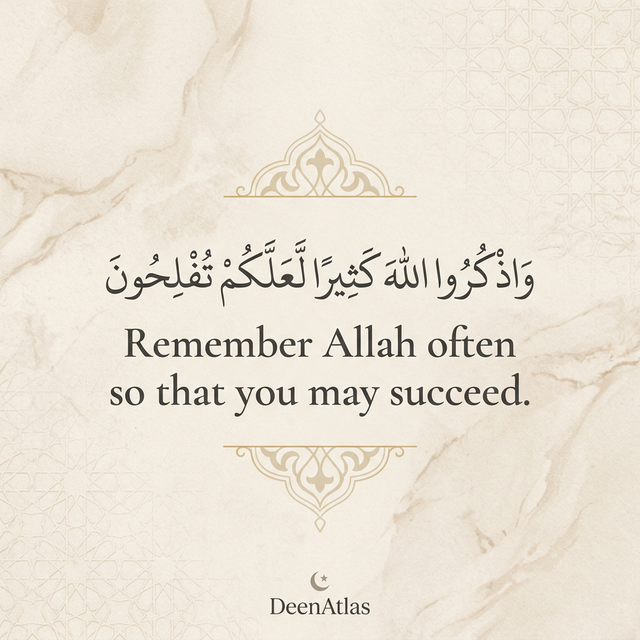
3. What Du'a After Prayer Actually Means
To fully grasp the massive weight of post-prayer practices, we absolutely must distinguish between the two primary Arabic terms that are constantly and heavily used in this specific context: Dhikr and Du'a.
While they are frequently, and sometimes casually, used interchangeably by the general public, they serve distinctly entirely different spiritual and psychological functions.
The Concept of Dhikr (Remembrance)
Dhikr literally translates to "remembrance" or "mentioning." In the direct context of post-prayer practices, Dhikr specifically refers to repeating short, highly structured, pre-defined phrases that actively praise, glorify, and heavily elevate Allah.
These are not personal requests for earthly items or emotional help; rather, they are purely objective declarations of divine theological truths. Examples include repeatedly saying "Glory be to God" or "God is the Greatest".
Dhikr acts as a powerful psychological anchor, rapidly stabilizing the heart and forcibly dragging the wandering human mind back to the absolute reality of God's immense power over the universe.
The Concept of Du'a (Supplication)
Du'a, on the other hand, explicitly translates to "calling out" or "supplication." This is the deeply personal, highly vulnerable act of directly asking Allah for extremely specific needs, desires, immense forgiveness, and heavy protection.
While Dhikr is primarily a generalized praise of the Creator, Du'a is a highly intimate, uniquely customized conversation. You can make Du'a in any language, in any state, and explicitly ask for anything that is morally permissible—from massive spiritual salvation to incredibly mundane daily needs.
The Divine Formula: The Prophet ﷺ established a genius, highly effective formula for the post-prayer routine. First, you perform structured Dhikr—systematically praising Allah and humbly establishing your position as a servant.
Only after the praise has been properly established do you then move emotionally into Du'a—asking for your personal worldly and spiritual needs from the One you have just heavily glorified.
4. Common Supplications (Dhikr & Du'a)
There is an incredibly rich, extensively documented tradition of exactly what the Prophet Muhammad ﷺ would specifically say immediately following the formal conclusion of the obligatory Salah.
These specific, structured Arabic phrases have been meticulously passed down through unbroken chains of narration for over fourteen huge centuries. They form the absolute backbone of Muslim post-prayer worship.
The Immediate Forgiveness
Extraordinarily, the very first action practically recommended immediately after completing the massive spiritual achievement of praying to the Lord of the Universe is to deliberately seek His forgiveness.
Upon saying the final Tasleem (turning the head right and left to exit the prayer), the Prophet ﷺ would immediately say three distinct times:
"Astaghfirullah" (I deeply seek the absolute forgiveness of Allah).
Scholars heavily explain this apparent paradox: why seek forgiveness after doing something incredibly good? They explain that human concentration is fundamentally flawed. During our tiny prayers, our minds inevitably wander to money, fears, and worldly problems. We seek forgiveness for the massive deficiency in our worship.
The Famous Tasbih Sequence (SEO Focus)
Following the initial supplications, a Muslim will usually proceed rapidly into the widely known, highly structured sequence of praise known as the Tasbih of Fatimah.
These specific phrases are extraordinarily widely reported in highly authentic hadith (such as Sahih Muslim) and are incredibly commonly recited after the five daily obligatory prayers by Muslims worldwide.
The 100 Reward: By completing this heavily mathematical sequence, a worshipper actively completes exactly 100 remembrances after prayer, securing an absolutely immense, guaranteed spiritual reward in a matter of mere minutes.
5. The Massive Significance of Remembrance
Why does Islam place such an incredibly heavy, sustained emphasis on exactly what a person does immediately after they have already formally completed their mandatory religious obligation?
The answer lies deeply rooted in the fundamental psychological and spiritual design of the extraordinary human heart (Qalb). The actual formal prayer is the minimum baseline; it is the absolute foundational structure. However, it is the continuous voluntary remembrance (Dhikr) that actually breathes vibrant life into that rigid structure.
The Polish of the Heart: Classical Islamic scholars famously compare the human heart to a literal metal mirror. Every single sin, negative thought, and worldly distraction throws a dark layer of thick rust onto this precious mirror.
While doing good deeds generally cleans it, the Prophet ﷺ explicitly stated that there is absolutely nothing that effectively obliterates this dark rust and aggressively polishes the heart quite like the intense, consistent remembrance of Allah.
Furthermore, post-prayer Du'a is performed in a state of supreme spiritual vulnerability. You have literally just physically prostrated (Sujood)—placing the absolute highest, most dignified part of your physical body (your forehead) directly onto the lowest possible ground out of pure, unadulterated submission.
When you immediately raise your hands to ask Allah for help directly after physically demonstrating such profound, overwhelming humility, your supplications carry radically more weight. The gates of divine acceptance are actively thrown wide open.
6. The Profound Spiritual Benefits
By relentlessly establishing a robust, non-negotiable habit of post-prayer remembrance, a Muslim slowly begins to inevitably unlock massive, tangible spiritual and psychological benefits that drastically alter their daily reality.
- Protection from Anxiety: The Quran explicitly guarantees that "Verily, in the remembrance of Allah do hearts find rest" (13:28). Engaging in structured Dhikr immediately forcefully breaks the crippling cycle of modern anxiety and overthinking.
- Massive Wealth in the Hereafter: The Prophet ﷺ described phrases like "Subhanallah" and "Alhamdulillah" as heavy physical weights that will literally fill the scales of a believer on the terrifying Day of Judgment. They require almost zero physical effort but yield infinite existential dividends.
- Protection against Arrogance: By actively reminding yourself 34 times after every single prayer that "Allah is the Greatest," it becomes psychologically impossible to maintain a toxic, inflated ego. It constantly ruthlessly destroys personal arrogance.
- Divine Company: In a beautiful Hadith Qudsi, Allah states, "I am with My servant when he remembers Me and his lips move mentioning Me." Post-prayer Dhikr is the ultimate access code to guaranteeing the intense, protective, loving company of the Creator.
7. Differences Between Madhabs (Schools of Thought)
While the absolute virtue and fundamental importance of post-prayer Dhikr is universally and enthusiastically agreed upon by every single major scholar in Islamic history, there are minor technical differences regarding exactly how it should ideally be performed in a congregation.
Should it be Loud or Silent?
The Hanafi and Maliki Approach: These schools strongly prefer that all post-prayer Dhikr be done completely silently by each individual worshiper. The primary logic is that raising one's voice might actively disturb a latecomer who is physically trying to complete their missed Rakats in the background.
The Shafi'i and Hanbali Approach: Some scholars within these broad traditions argue that slightly raising the voice (without screaming) was a documented practice of the Prophet ﷺ specifically to teach the completely uneducated masses exactly what phrasing to officially say.
Today, many global mosques adopt a beautiful, practical middle ground: the Imam might temporarily recite the very first few phrases audibly just to signal the transition, before everyone drops their voices to an intensely private, quiet murmur.
The Position of the Hands
When physically making Du'a (asking for things), the universal sunnah is to physically raise both hands up to chest level, keeping them close together, with the palms facing directly up towards the sky, like a desperate beggar waiting to fiercely catch a falling coin.
However, when performing Dhikr (the repetitive chanting of phrases like Subhanallah), the highly recommended sunnah is to simply count the precise numbers specifically using the physical joints of the fingers on the right hand.
8. Frequently Asked Questions (FAQ)
Because these practices are so incredibly common and deeply integrated into daily Muslim life, absolute beginners inevitably generate dozens of highly practical, logistical questions regarding exactly how they should be properly executed.
Do I have to recite Du'a after every single prayer?
No, you do not technically have to. Reciting Dhikr and Du'a immediately after the obligatory (Fard) prayers is categorized as a highly emphasized Sunnah (recommended), but it is absolutely not mandatory or legally obligatory under any circumstances. Your underlying prayer remains perfectly valid even if you stand up and leave immediately after the Tasleem.
Can I use a physical tasbih (prayer beads) to count?
Yes, the vast majority of classical scholars agree that using physical beads (Misbaha) or even a modern digital clicker to accurately keep track of the count is completely permissible. However, using the joints of the right hand is generally considered superior, as the Prophet ﷺ stated the fingers will be questioned and effectively made to speak on the Day of Judgment.
Can I make Du'a in English (or my native language)?
Absolutely. While the formal, obligatory prayer (Salah) must be strictly recited exclusively in Arabic, post-prayer Du'a is your deeply personal, intimate conversation with God. You can, and absolutely should, passionately ask Allah for anything you desperately need in your native, most comfortable language.
What if I forget how many times I have said Subhanallah?
If you lose your exact count during the 33 repetitions, the standard fiqh ruling is to simply build upon what you are absolutely certain of. If you are debating whether you said it 20 or 25 times, assume the lower number (20) and simply continue counting from there to ensure you hit the required target.
Can I do my Dhikr while walking to my car or driving?
Yes. While it is obviously physically optimal and vastly superior to remain calmly seated on your prayer mat exactly where you finished praying, the religion is incredibly practical. If you are rushing back to a stressful job, you can absolutely accurately complete your entire Dhikr sequence while walking, driving, or sitting at your desk. The reward remains intact.
9. Conclusion
The rich, undeniably beautiful tradition of Du'a and Dhikr immediately after formal prayer represents one of the most practically accessible, highly structured methods for regular Muslims to radically transform their daily spiritual lives without radically altering their busy schedules.
By merely dedicating an extra incredibly brief three to five minutes specifically at the exact tail end of every single obligatory Salah, a believer systematically and heavily secures vast oceans of divine forgiveness, aggressive psychological protection from daily stress, and mathematically guarantees massive spiritual rewards on the terrifying Day of Resurrection.
Start incredibly small and deliberately manageable. Begin by simply ensuring you never skip the deeply profound three repetitions of "Astaghfirullah" immediately following every prayer. Slowly, naturally, aggressively build up to mastering the complete 100-remembrance sequence.